
SurfaceWaterDrainageinDorset,Hampshire&Wiltshire
Water pooling on the drive, a downpipe with nowhere to go, or new pipework to plan: we look at the site, tell you where the water should go and what it costs, before anyone digs.
- No call-out fee, and free quotes
- The price we agree is the price you pay
- We aim to be with you within 60 minutes, and we'll give you an arrival time when you call
★★★★★Rated 5 stars on Google
Get an Instant Quote
Tell us about the property and where the water sits. We will come back with a price, or our labour rate.
- 5★Rated on Google
- EUSR / NADCApproved engineers
- 60 minOur aim to reach you
- 25 year warrantyOn qualifying repairs
What you get, and what you are not charged for
The worries people have about drainage quotes, answered before you ask.
No call-out fee
You pay for the work, not for us turning up.
A price before we set off
For most jobs, call us and we will give you a price, or our labour rate, before we set off.
Nothing extra without your say-so
If we find something that needs more work, we tell you what it is and what it costs first.
Every charge stated up front
Waste disposal, parking and VAT are stated clearly before any work starts.
The site left clean
Cleaned, tidied and sanitised, every time.
Insured
Public liability cover up to £1 million, in case something is damaged.
NADC members, EUSR-carded engineers
Members of the National Association of Drainage Contractors.
What having surface water drainage installed looks like
One firm from the first look at the site to the last tidy-up, so it does not become your project to manage.
 01
We look at where the water goes now
We find the cause on site and explain it, and tell you what we would recommend.
 02
You decide, and the price is agreed
Have the work done now or book it in, your call. The price we agree before we start is the price you pay, unless you approve extra work.
 03
We do the work and leave it clean
We lay and connect the pipework. Every site is left cleaned, tidied and sanitised.
No fee
To call us out
Agreed first
The price you pay, unless you approve extra work
NADC
Drainage contractors association member
20 years
In drainage between the two of us
Pricing
What surface water drainage costs, and what moves it
Priced after we have seen the site
The number moves with how many downpipes and gullies are being connected, how far the water has to travel, what has to be dug through (lawn, block paving or tarmac) and whether it ends up in a soakaway or a sewer. We would rather look than guess, then tell you the price before any work starts.
- No hidden extras: every charge is stated up front
- For most jobs, a price or our labour rate before we set off
- The price we agree is the price you pay, unless you approve extra work
Surface water drainage design in Dorset, Hampshire and Wiltshire: how a job runs
Five steps, and you are only committed once you have said yes to a price.
You call and we give you a price where we can
Tell us what is happening. For most jobs we will give you a price, or our labour rate, before we set off.
We look at the site and explain what we see
We diagnose on site, tell you where the water should go and why, and say plainly if it is a smaller job than you feared.
You decide when the work happens
Do it now or book it in. If we find something that needs more work, we tell you what it is and what it costs first.
We do the work
Gullies, downpipe connections, new pipework or a soakaway, laid to the route we agreed. We will not put a time on it until we have seen the site.
We leave the site clean
Every site is left cleaned, tidied and sanitised, and the bill is the price we agreed unless you approved extra work.
Our Google reviews, live from the profile
Rated 5 stars on Google. The cards are chosen from the reviews left there.
5.0
Buster Marrow
We used this company to resolve a blockage in our drains and would definitely recommend them. Excellent service and communication throughout.
Scott Green
I had blocked drain at my house and DC Drainage solutions unblocked quickly and efficiently. Great service highly recommended.
Cameron Doe
David come over to sort out a blocked waste pipe for us. He was great from start to finish and left the place spotless once work was complete. Would highly recommend and will definitely use again
The bits people worry about
Answered here, so nobody has to ask when we arrive.
Will you dig up my garden or drive, and leave a mess?
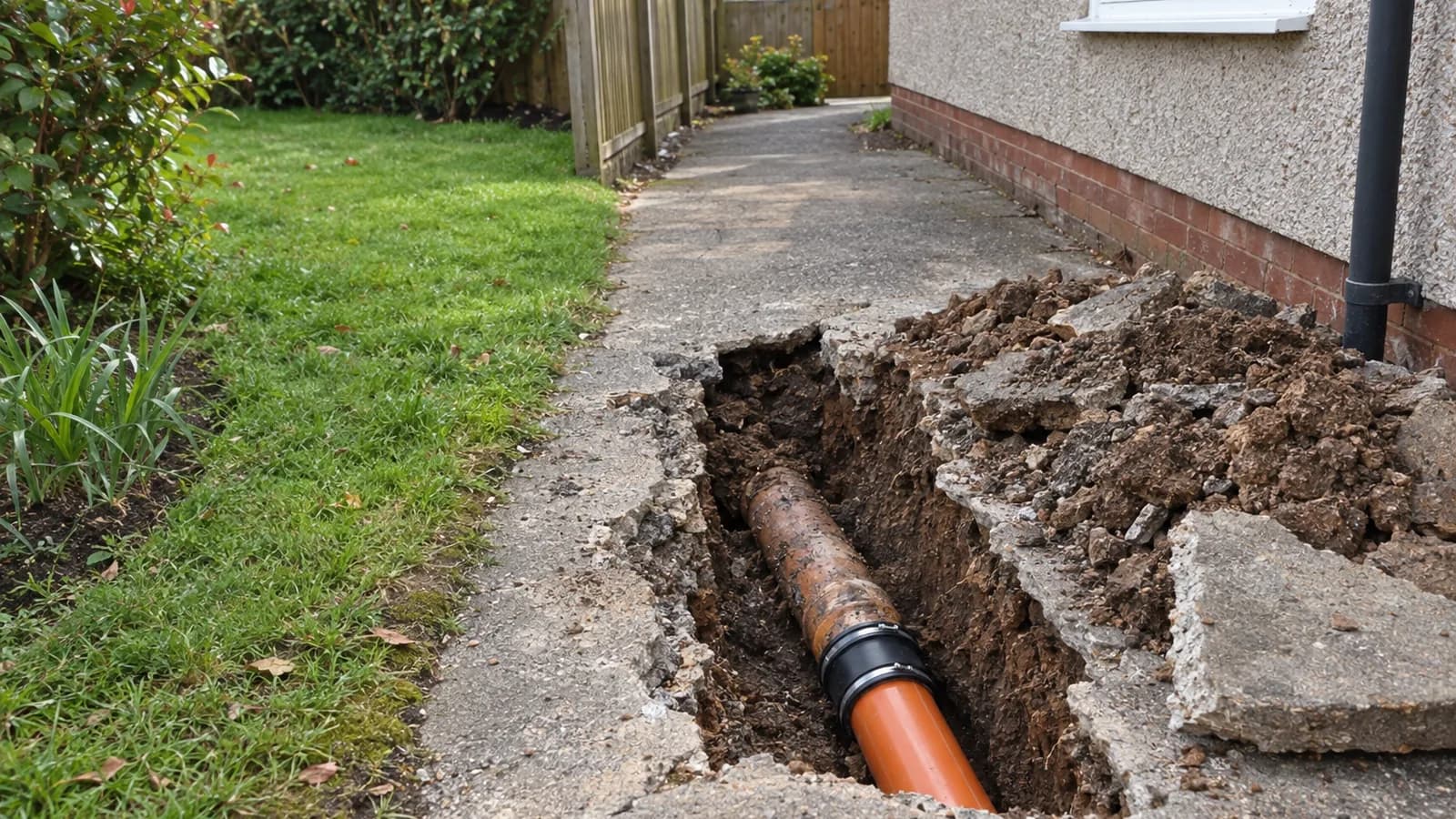
New pipework usually means a trench, and we tell you where it will run before we start. Every site is left cleaned, tidied and sanitised.
What if something gets damaged?
We are insured, with public liability cover up to £1 million, so the risk sits with us and not with you.
What if you find something else once it is open?
We tell you what it is and what it costs first. Nothing extra happens without your say-so, and you choose whether it is done now or later.
Surface water drainage: questions we get asked
Answered straight, including the ones where the honest answer is "it depends".
How much does surface water drainage cost, and can I get a price before you come?
For most jobs, yes: call us and we will give you a price, or our labour rate, before we set off. There is no call-out fee, and quotes are free. What moves the number is how many downpipes and gullies are involved, how far the water has to travel, what has to be dug through and where it ends up. The price we agree is the price you pay, unless you approve extra work.
Will a soakaway work in clay soil?
Often not well, because clay drains slowly. How well the ground drains has to be checked before a soakaway is chosen, and where it is too slow the answer is usually another route for the water, such as a sewer connection. We look at the site and tell you which we would do.
What is the minimum fall for surface water drainage?
Pipes need a steady fall so the water keeps moving and does not sit and silt up. The right gradient depends on the pipe size and the length of the run, so we set it out on site. We will not quote a rule-of-thumb figure without seeing the levels.
Who is responsible for surface water drainage, me or the water company?
Usually the property owner, for pipes that serve only that property inside its boundary. Pipes shared with neighbours, and public sewers, are often the water company's. It depends on how your surface water drainage system is set up, so if you are unsure, ask your water company. We can look at how your roof and drive water is draining when we visit.
Is there a surface water drainage charge, and can I get a rebate?
Some water companies include a surface water drainage charge on the bill, and some allow a rebate where roof and drive water does not go into the public sewer. Whether either applies depends on your water company and how your property drains. That is their decision, and we cannot promise one. What we can do is show you where your water actually goes.
My surface water drainage is blocked. Can you clear it?
Yes. We clear blocked gullies and remove silt and debris, and it is often a clear-out rather than a dig. If we find a break or something that needs more work, we tell you what it is and what it costs first. Nothing extra happens without your say-so.
What it involves
Surface water drainage: where your rainwater goes, and who plans it
Water pooling on the drive, a downpipe that spills against the wall, an extension whose roof water needs taking somewhere: all of it is surface water, meaning rain from roofs, patios and drives, and it has to end up somewhere that can take it. That might be a soakaway in the garden, a surface water sewer or a watercourse, and which is right depends on the ground, the space and who owns the pipes nearby. Working from our base in Ringwood, we look at the site first, tell you what we would do, and price it before we set off. Where it turns out to be a smaller job than you feared, we say so.
- Downpipes, gullies and channels connected to a soakaway or a sewer
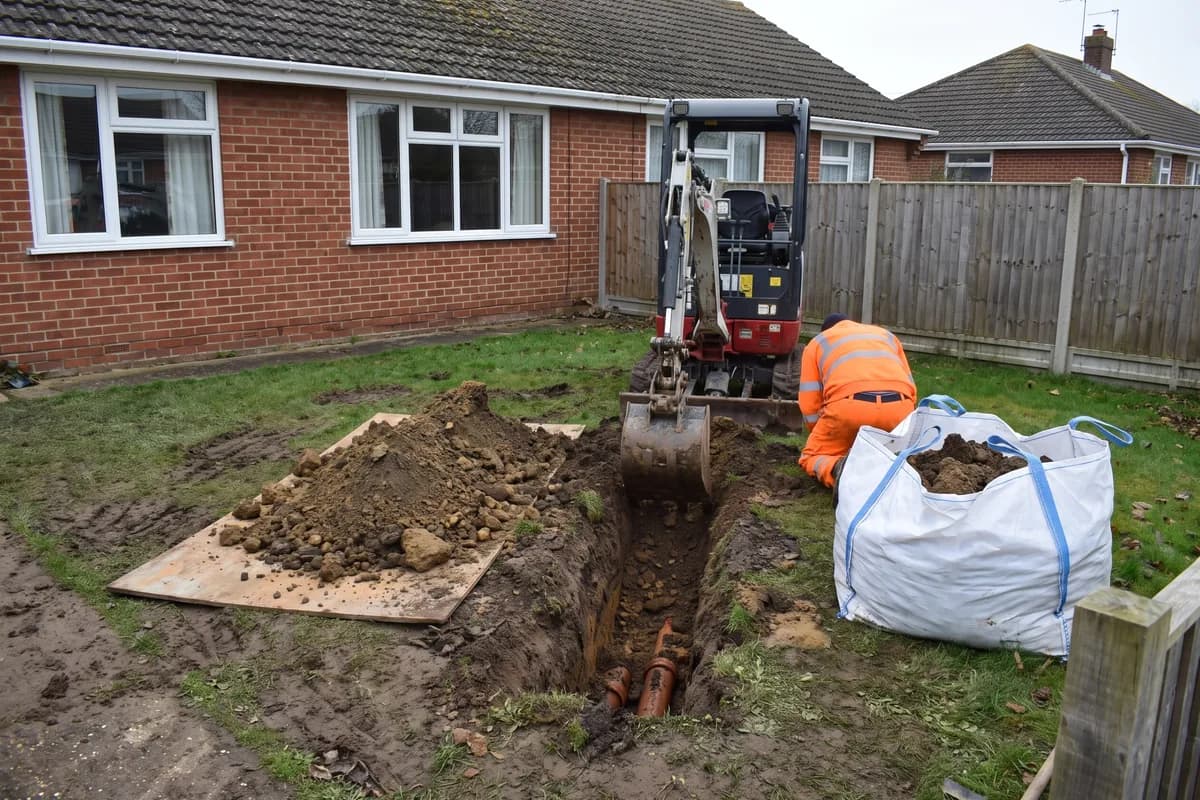
- New pipework laid where the site allows, with the route explained first
- Silted or blocked gullies cleared before anything is dug up
 Downpipe and gully connected to the drain
What you can see, and what it means
What people ring about, and what is usually going on. Some of it is a clear-out, not a dig.
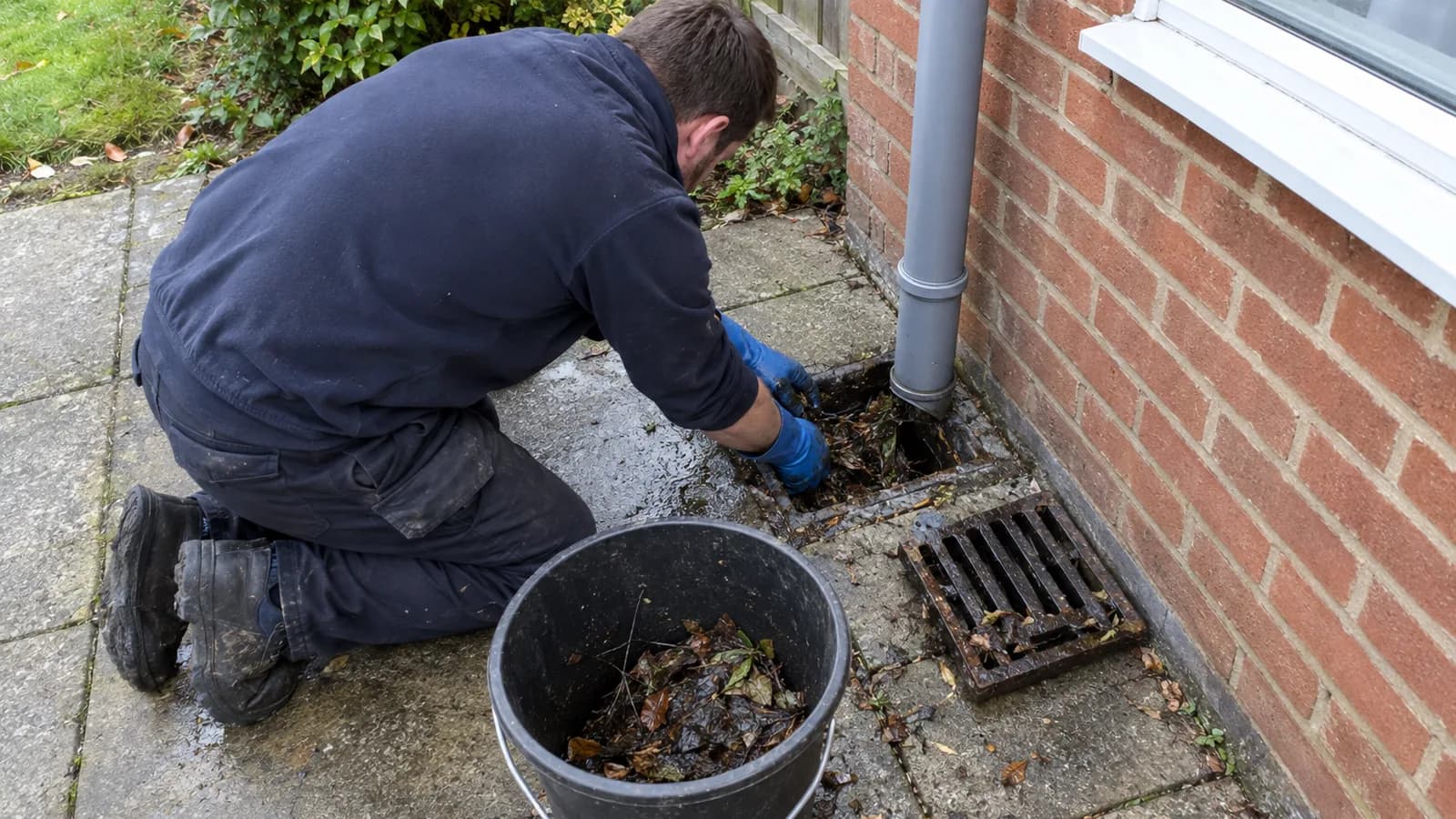
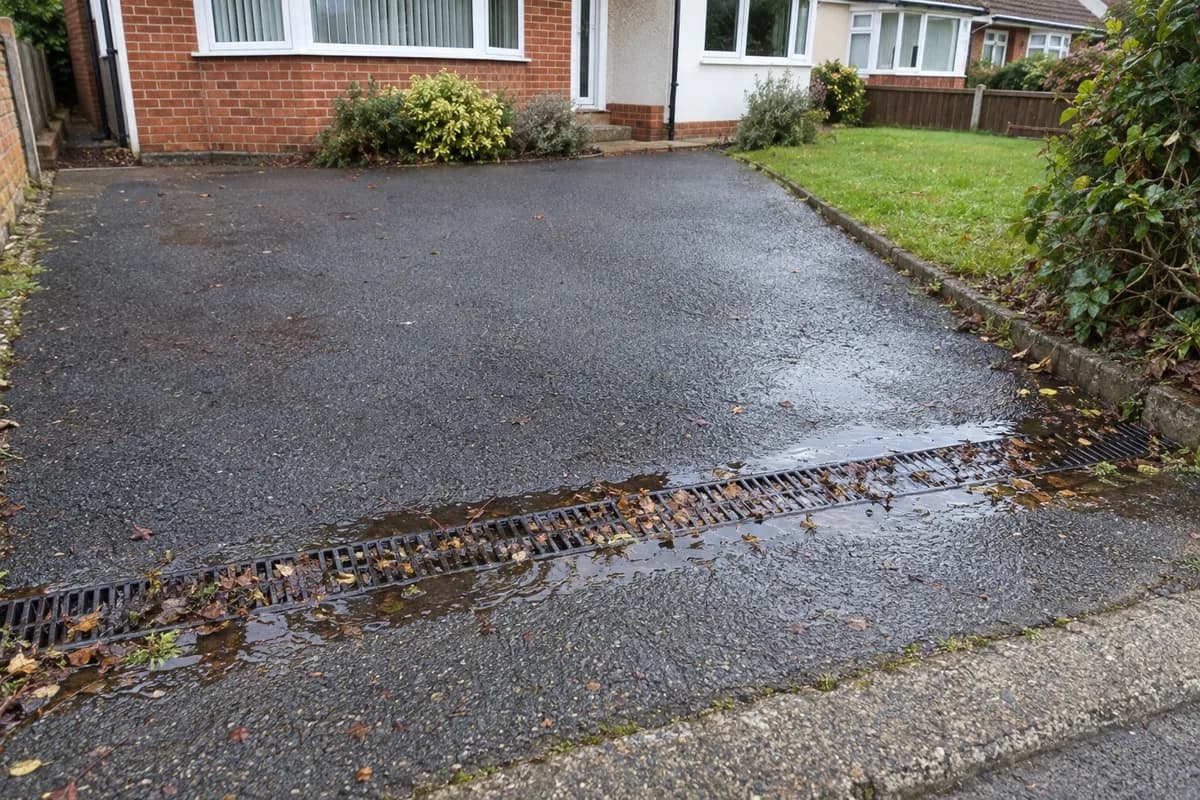
Surface water drainage blocked: a gully or channel that will not empty
What it actually isSilt, leaves and debris packed into the gully or channel, or into the pipe beyond it.
What it needsOften a clear-out rather than a dig. We clear it first and tell you if anything deeper is behind it.
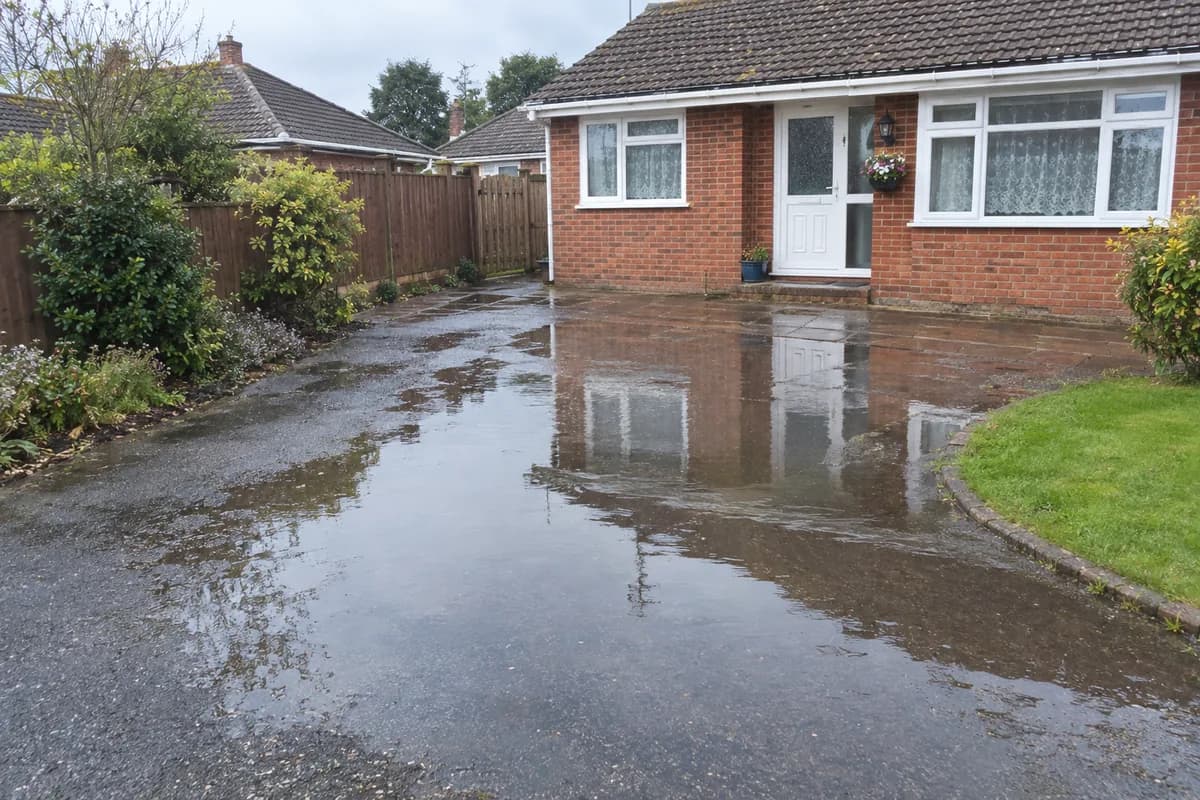
Water pooling on the drive or patio after rain
What it actually isA blocked channel or gully, a surface that falls towards the house, or ground that can no longer take the water.
What it needsWe work out which it is on site, and tell you before anyone quotes for a dig.
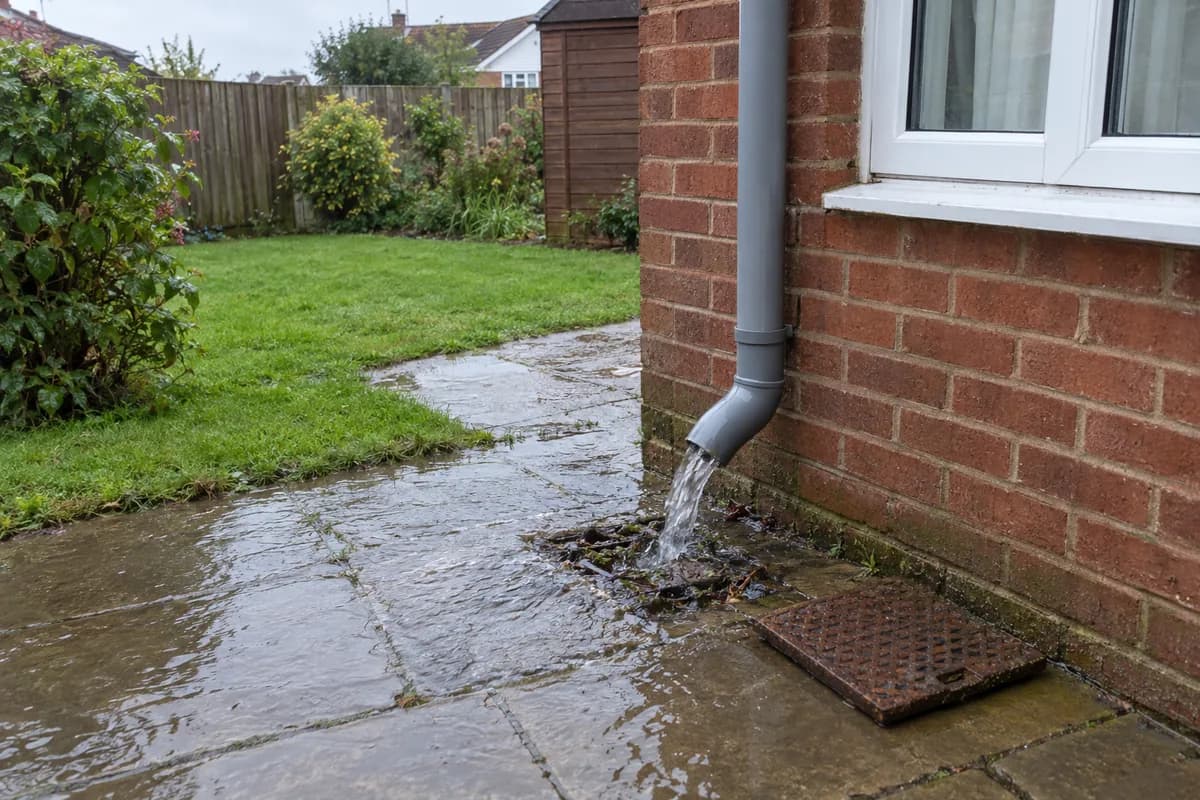
A downpipe that overflows or spills at the base
What it actually isThe pipe below it is blocked or broken, or it was never connected to anything.
What it needsWe trace where it goes. A blocked pipe is cleared, and a missing connection is laid.
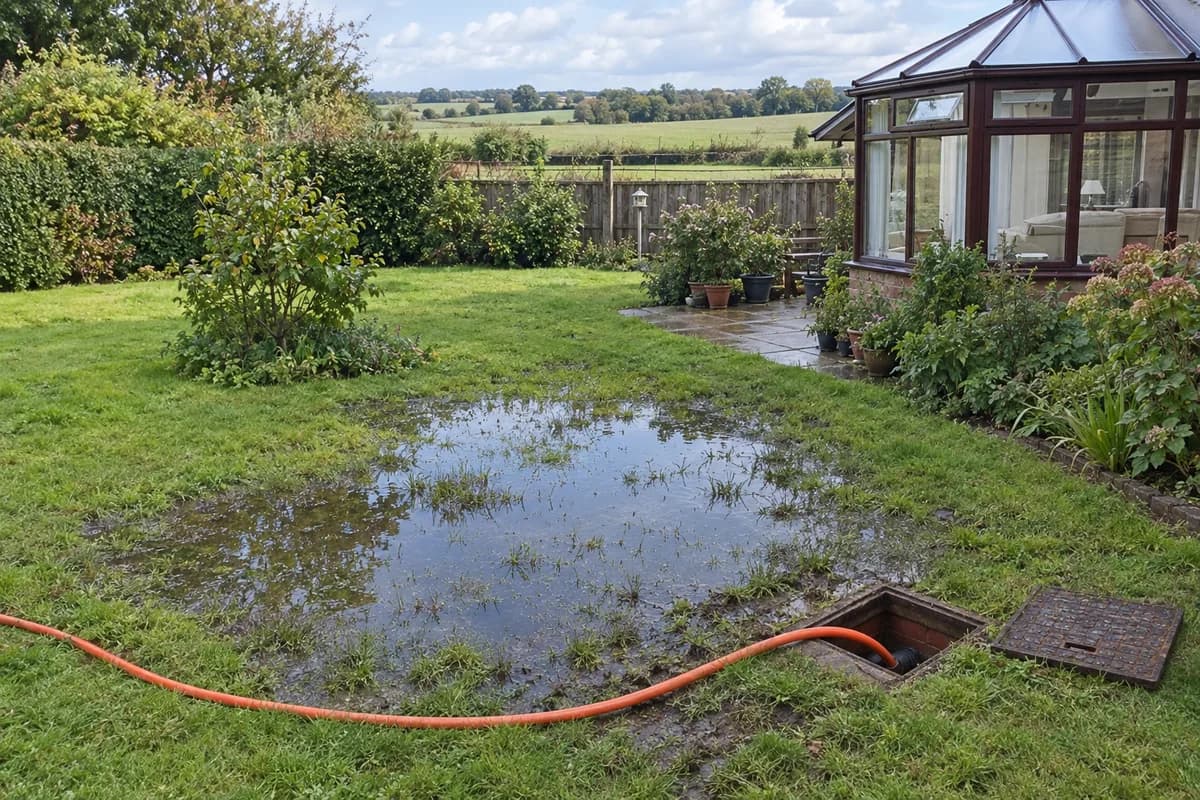
A soakaway that fills and stays full
What it actually isSilt clogging the pit, or ground that drains too slowly to take the water.
What it needsSometimes it can be cleared or repaired. Where the ground is the problem, the answer is another route for the water, such as a sewer connection, subject to agreement from its owner.
Not sure which one yours is? Call us and describe it.
Soakaway or sewer connection: the honest difference
These are the two most common places for roof and drive water to go, and neither is always right. Where the ground drains well and there is room, a soakaway is often the simpler job. Where it does not, a sewer connection may be the answer, and we would rather tell you which suits your site than sell you the one we prefer.
| Soakaway | Sewer connection | |
|---|---|---|
| Where the water goes | Into the ground on your own property | Into a sewer, usually with the owner's agreement |
| What decides it | How well the ground drains, and how much room there is | Whether a suitable sewer is close enough to reach |
| What can rule it out | Slow-draining ground such as clay, or too little space | No suitable sewer nearby, or no agreement from its owner |
| Disruption | A pit and pipework in the garden | A trench along the route, longer the further the sewer is |
Swipe to see every column
Foul water, surface water and who agrees what
Foul water comes from toilets, sinks, baths and showers. Surface water is rain from roofs, patios and drives. Many properties keep the two in separate pipes, but older ones sometimes share one, so foul and surface water drainage layouts vary from house to house. Which pipe your downpipes join changes what you can do and who has to agree to it.
In broad terms, building guidance generally prefers rain to soak into the ground where it can, which is why a soakaway is usually considered first where the ground and the space allow. Where they do not, the water goes to a watercourse or a sewer. Any surface water drainage strategy in Dorset or Hampshire comes down to the same questions: what the ground can take, what is nearby to connect to, and who owns it.
Bigger schemes may need a written drainage strategy for a planning application. Whether yours does is a question for your local council, and we will not guess at it. Connecting to a public sewer usually needs the sewer owner's agreement, which takes time we do not control, so we say so up front rather than promise a date.
Based in Ringwood, we work across Dorset, Hampshire and Wiltshire, from Poole, Bournemouth and Christchurch to Southampton, Winchester and Portsmouth. Ground and drainage arrangements vary between them, which is why we look at the site before we recommend anything.
Other drainage installation work
If this is not the job you need, this one might be.
A free quote, and a price agreed before we start
We find the cause on site, explain it, and you decide whether we fix it now or book it in.
Get an Instant Quote
100% free estimate. Tell us what you need and we'll come back with a price. No pressure, no hard sell.
Prefer to talk? Call DC Drainage Solutions on 0800 246 5850